A few months back, a good friend asked if I didn't mind giving him a ride to pick something up from a friend. Knowing this particular friend, I probably should have asked more questions prior to happily agreeing, thinking that it would be a short jaunt across town. Little did I know, but I had just signed up to drive a 21 foot box truck to BFE through Seattle rush hour traffic to then pick up and load a giant freaking pipe organ up and bring it back to his place.
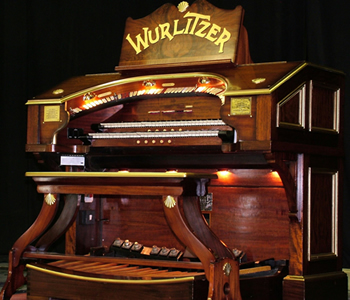
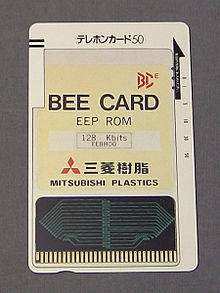
Four hours later, we took a look inside. The rats nest of cables had grown and evolved as the organ had been wired up to work with midi or drive full pipes. The mission is to strip out what can be reasonably removed, and replace the system that ran on Bee Cards with a Teensy. For those who have never heard of a Bee Card, they look like this:
By the time I got back around to help Nathan out, he had already figured out how to drive the bells and read the input from the keys. The first electronics part of the project that I helped with was getting trying to replace the control board with the Teensy.
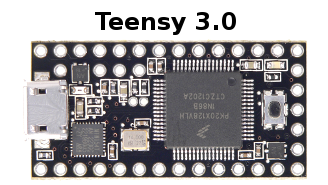
Each of the levers ran to a board that read the state and to a board that controlled the electromagnets that flipped the instrument combination levers up and down for the presets. A central board takes the inputs from the the state reading board and then gives commands, when appropriate, to the flipper board. All of the internal boards ran on 12V power, so we used a level shifter to interface with the Teensy without frying it.

The level shifters and shift registers were my first experience with learning to read a data sheet. I skimmed the level shifter data sheet at first, and learned very quickly that failure to read carefully can result in letting the magic smoke out of things. Just connecting high to high and low to low didn't work out, since the conversions only occur one direction with half going up and half going down, meaning we needed twice as many level shifters as I initially thought.

Soldering the shift registers was an exercise in patience, as the extremely tiny gauge that ran to each of the electromagnetic switches were much smaller than the through hole and prone to snapping if bent wrong. Thus began the exercise in careful and delicately rerouting all the cables in a more manageable fashion. We stripped out about 100lbs of antique electronics, but at the cost of a lot of soldering. They say that you master a skill once you spend 1000 hours doing it. I suppose I am part of the way to that, but rewiring it is the next step to finish this.
More to come.